Configurations
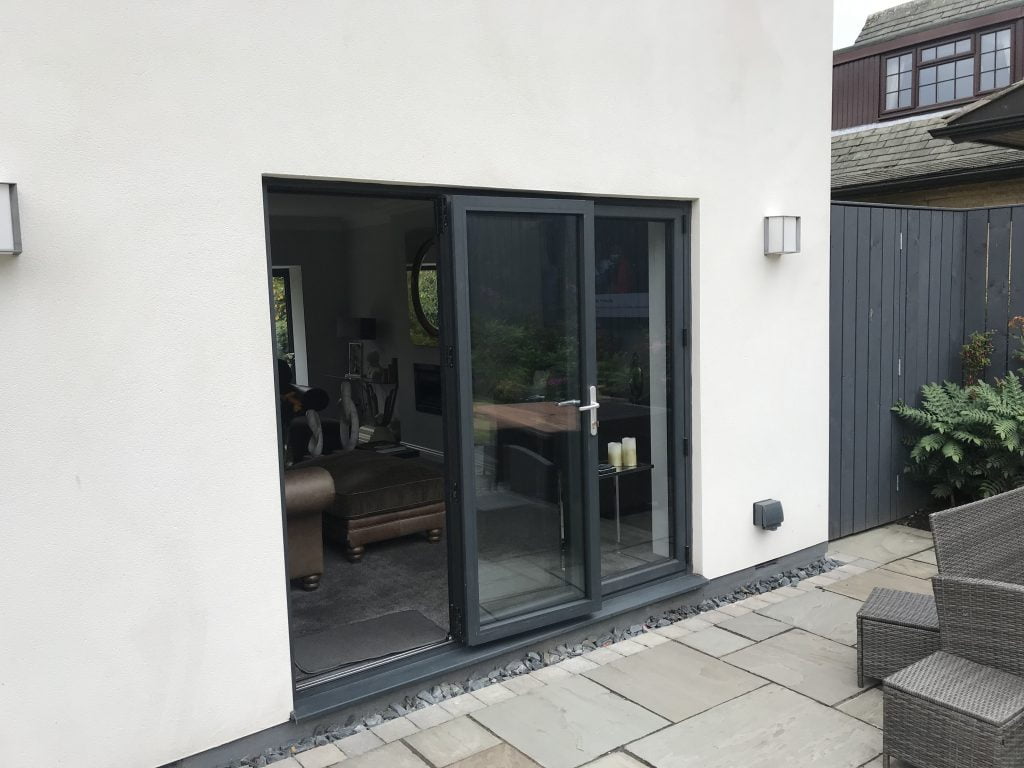
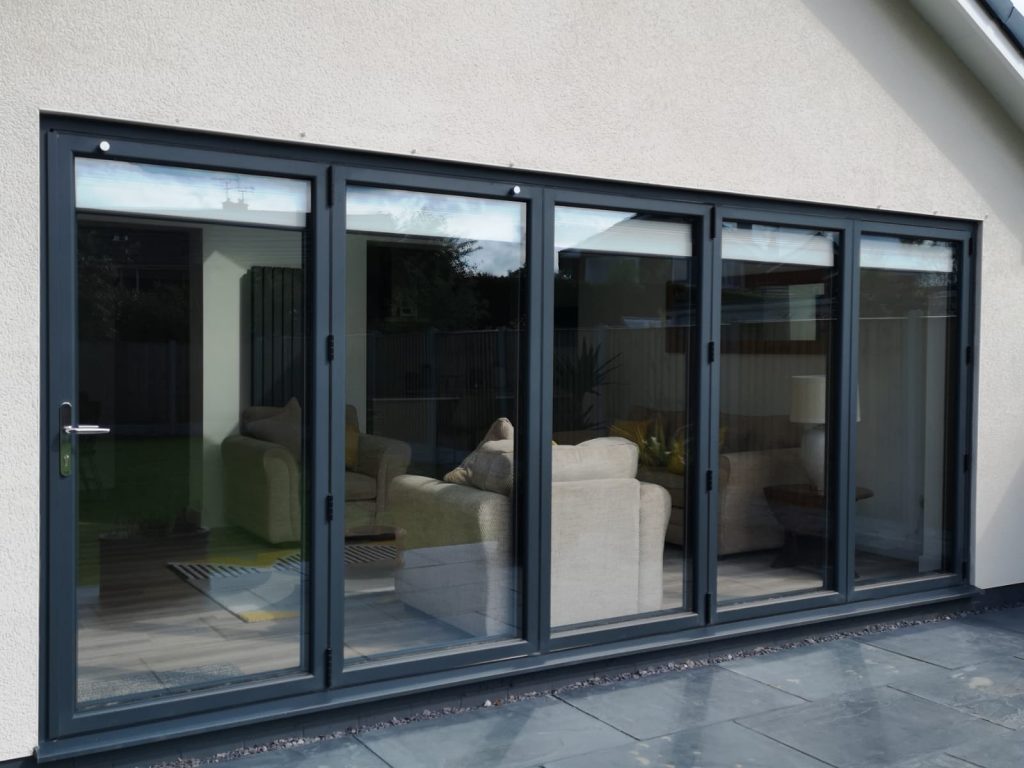
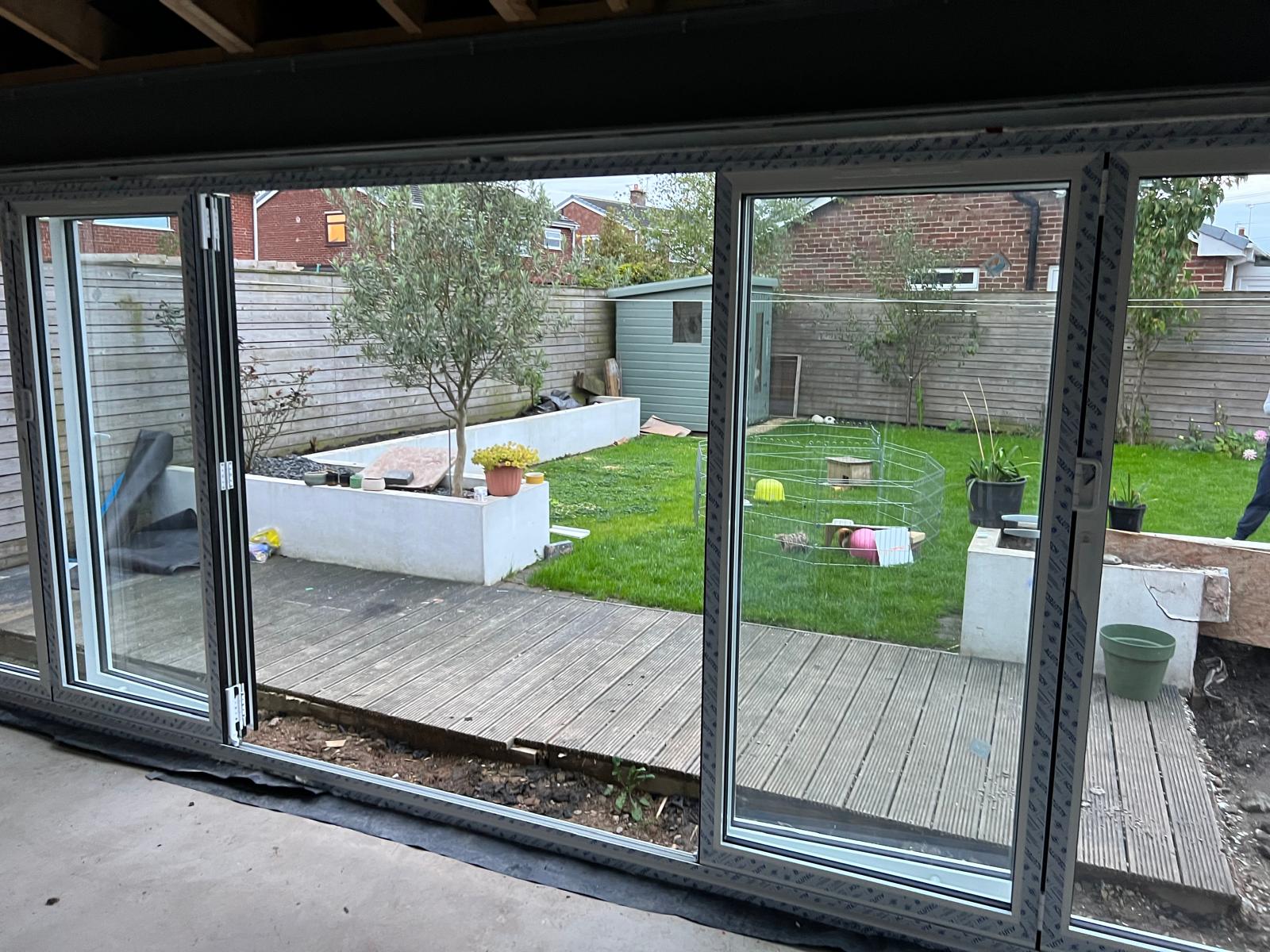
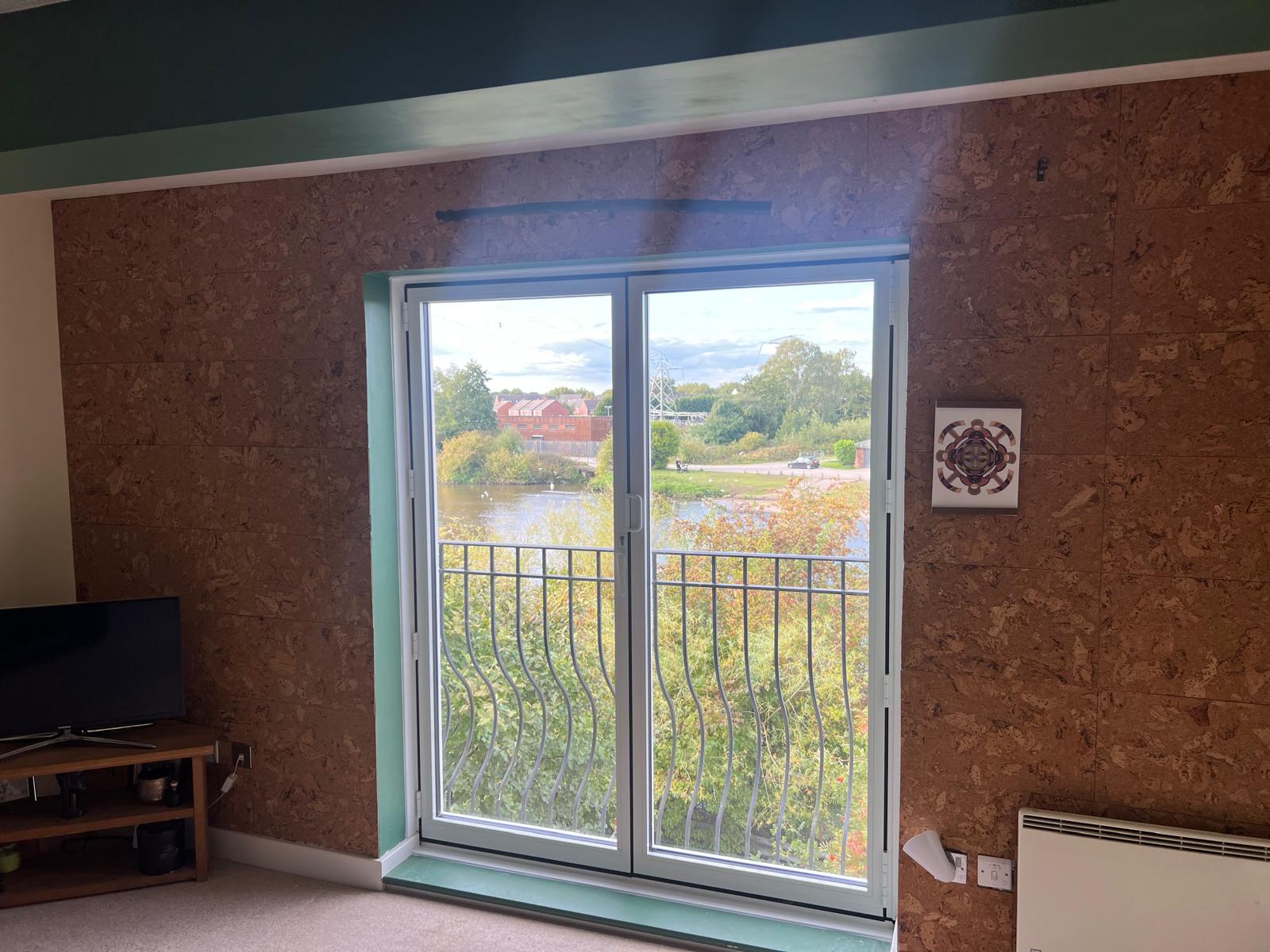
Sliding doors are described by the number of panes and the number of tracks.
Two pane, two track. One fixed, one sliding. The simplest and most cost-effective arrangement, and the right answer on openings up to about 3.5m.
Three pane, two track. Two fixed panes with one slider passing behind, or a centre-opening arrangement. Good for wide openings where you don’t need more than half of it open.
Three pane, three track. All three panes slide and stack together at one end, opening two-thirds of the aperture. More frame depth at the threshold, considerably more open space.
Four pane, two track. Centre-opening, sliding both ways. This is the arrangement that looks best on a symmetrical elevation, and it’s very popular on rear extensions where the doors are centred on the room.
Pocket sliding. The panes slide into a cavity built into the wall, so when they’re open there is no frame visible at all. It needs to be designed in before the wall is built, so it’s an option for new build and full renovations rather than replacements.
Pane sizes are confirmed at survey — the practical maximum on any given job depends on glass weight, gear rating and access for installation.