uPVC Windows & Doors in Warrington

Most of the double glazing we replace in Warrington is uPVC that went in during the late nineties and early two-thousands. Twenty-five years is a fair innings for a window, and the ones coming out now are usually failing in the same three ways: blown units, dropped hinges, and frames that have gone chalky and won’t come clean.

What goes back in is a different product. Modern uPVC is multi-chambered, steel-reinforced where it needs to be, and glazed to a standard that didn’t exist when the originals were fitted. The heating bill difference is real.

What you’re actually getting

Multi-chamber profiles. The frame is divided internally into sealed chambers rather than being a hollow box. Each chamber is a layer of trapped air, and trapped air is what insulates. This is the biggest single difference between a modern uPVC window and one from 1999.

Steel reinforcement through the frame and sashes on larger openings, so the window stays square and the locks stay aligned.

A-rated as standard. Window Energy Ratings run from A++ down to G, and the whole-window rating accounts for the glass, the frame and the spacer bar together. Our standard specification is A-rated, with A+ available. Approved Document L requires replacement windows to achieve 1.4 W/m²K or better, or WER band B — an A-rated window clears that comfortably.

Glazing. 28mm sealed units, low-emissivity soft coat on the inner pane, argon-filled cavity, warm-edge spacer bar. The spacer bar is the unglamorous bit that matters — a warm-edge composite spacer instead of the old aluminium one removes the cold bridge around the perimeter of the glass, which is where condensation used to form first.

Trickle vents integrated into the frame head. Now a Building Regulations requirement on most replacement window work.

Window styles

Casement. Side-hung and top-hung openers in any combination with fixed lights. The standard for most Warrington housing stock.

Tilt and turn. Tilts in for ventilation, swings in for cleaning. Worth specifying on anything above ground floor.

Sliding sash. Vertical sliding uPVC sashes for period and Victorian properties where the original sashes have gone. Modern versions have proper deep bottom rails and run on spiral balances rather than cords and weights, and can be specified with astragal bars to match the original glazing pattern.

Bay and bow windows. Structurally supported with reinforced corner posts, replacing like for like on the semi-detached and terraced stock that makes up a lot of Warrington and Widnes.

Flush casement. The sash sits flush with the frame face rather than proud of it, giving a timber-look appearance. Suits older properties and conservation-sensitive elevations.

uPVC doors

uPVC back doors and side doors. Fully panelled, half glazed or fully glazed, with multi-point locking as standard. The workhorse of the range and usually the cheapest way to fix a draughty, insecure back door.

uPVC French doors. Two opening leaves, with or without side lights. A cost-effective way to open up a rear elevation where a bi-fold isn’t in the budget.

uPVC patio doors. Two- or three-pane sliding, running on stainless steel rollers with anti-lift protection.

If you want a front door, look at composite front doors instead — for the same money you get a substantially more secure and better-insulated door, and on a front elevation it’s worth the difference.

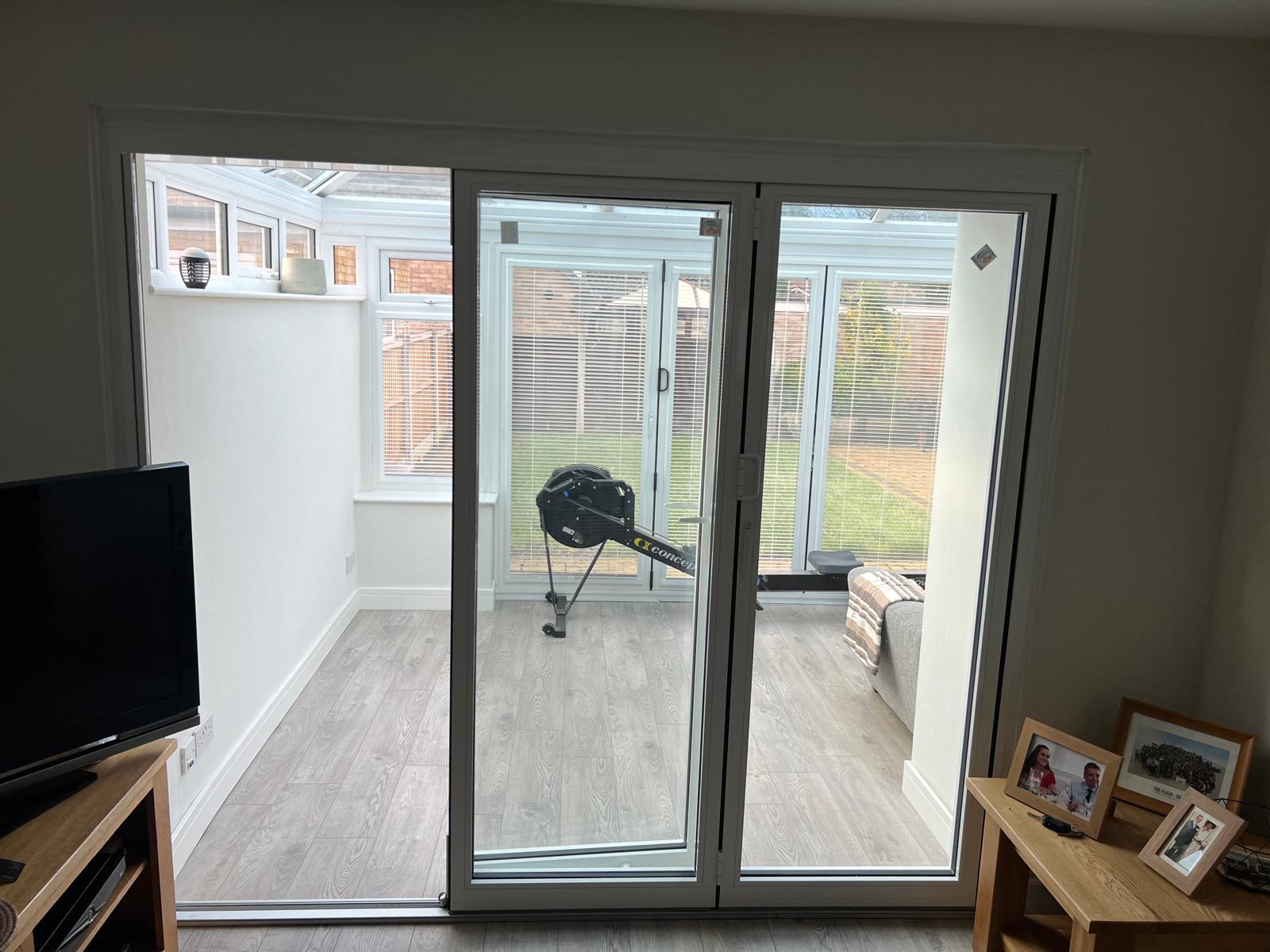
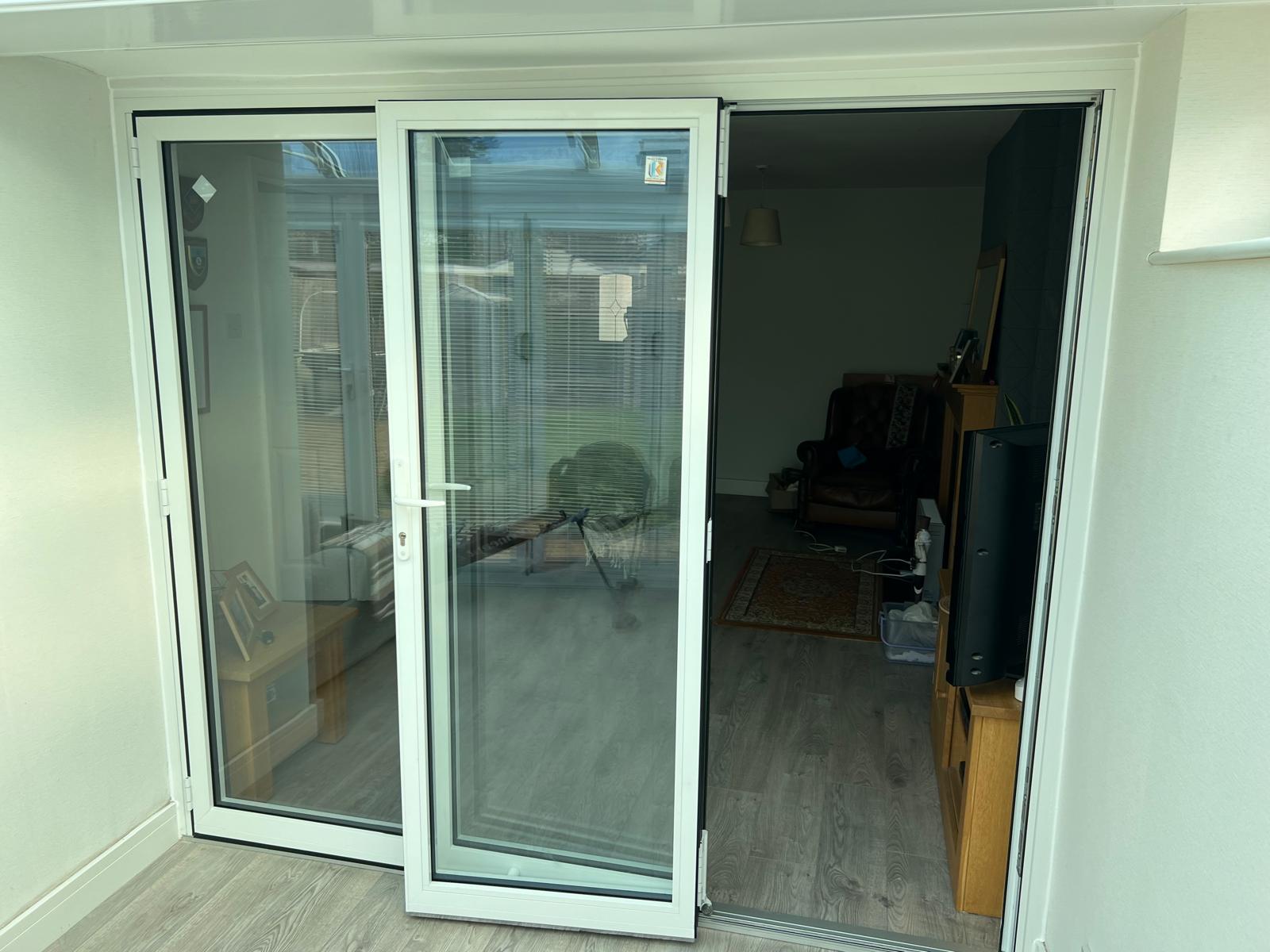
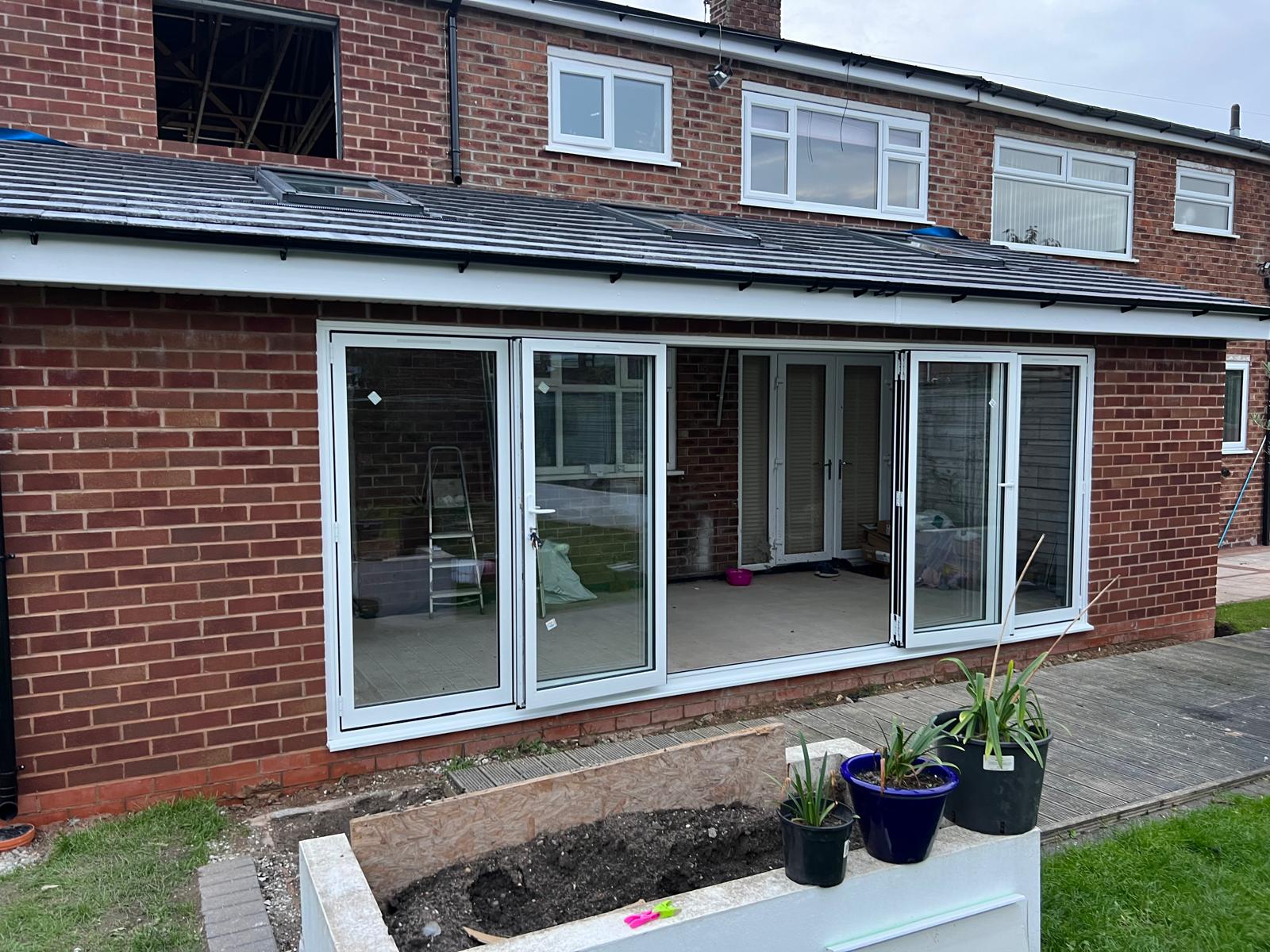
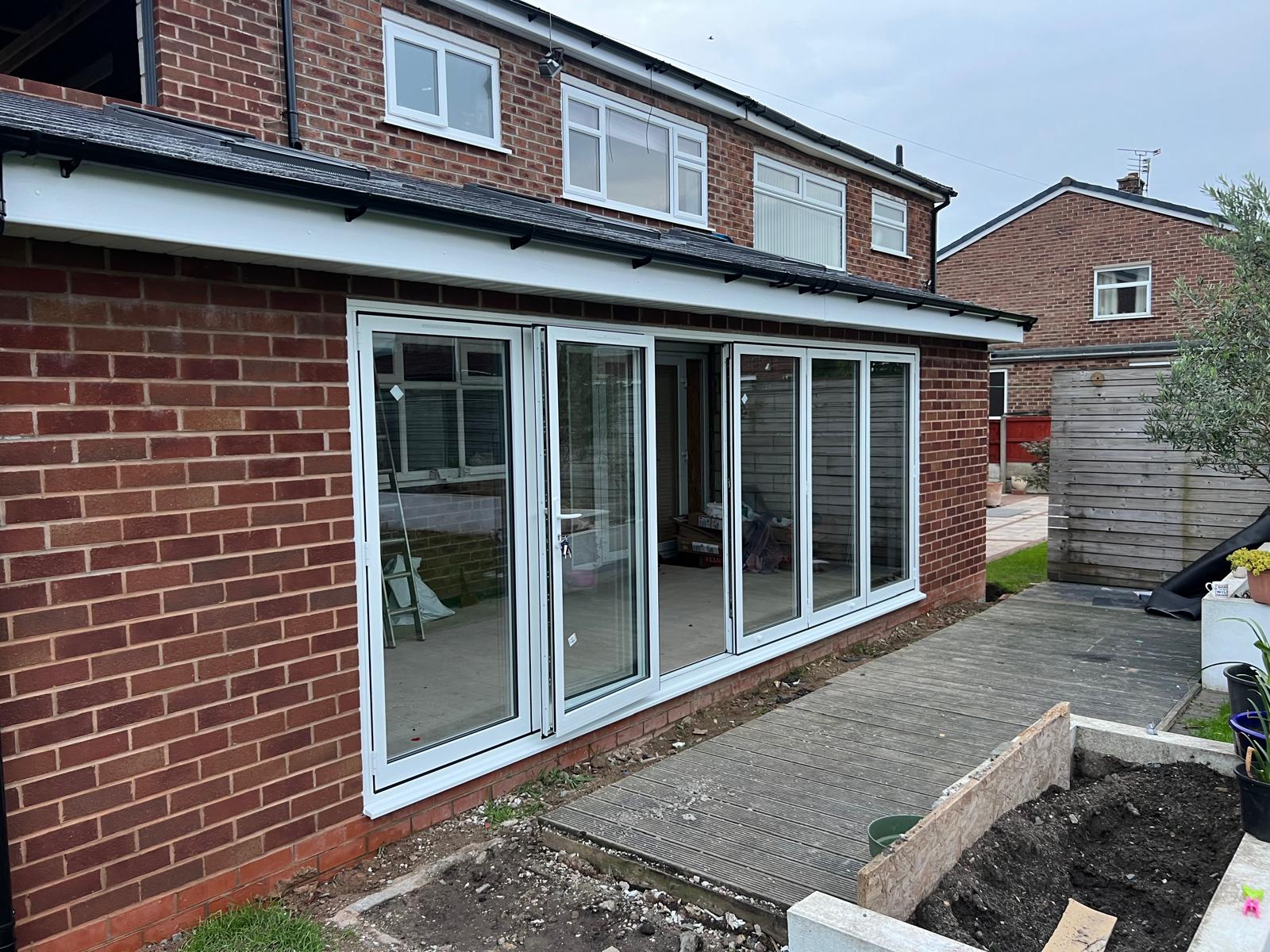
Recent uPVC window and door installations

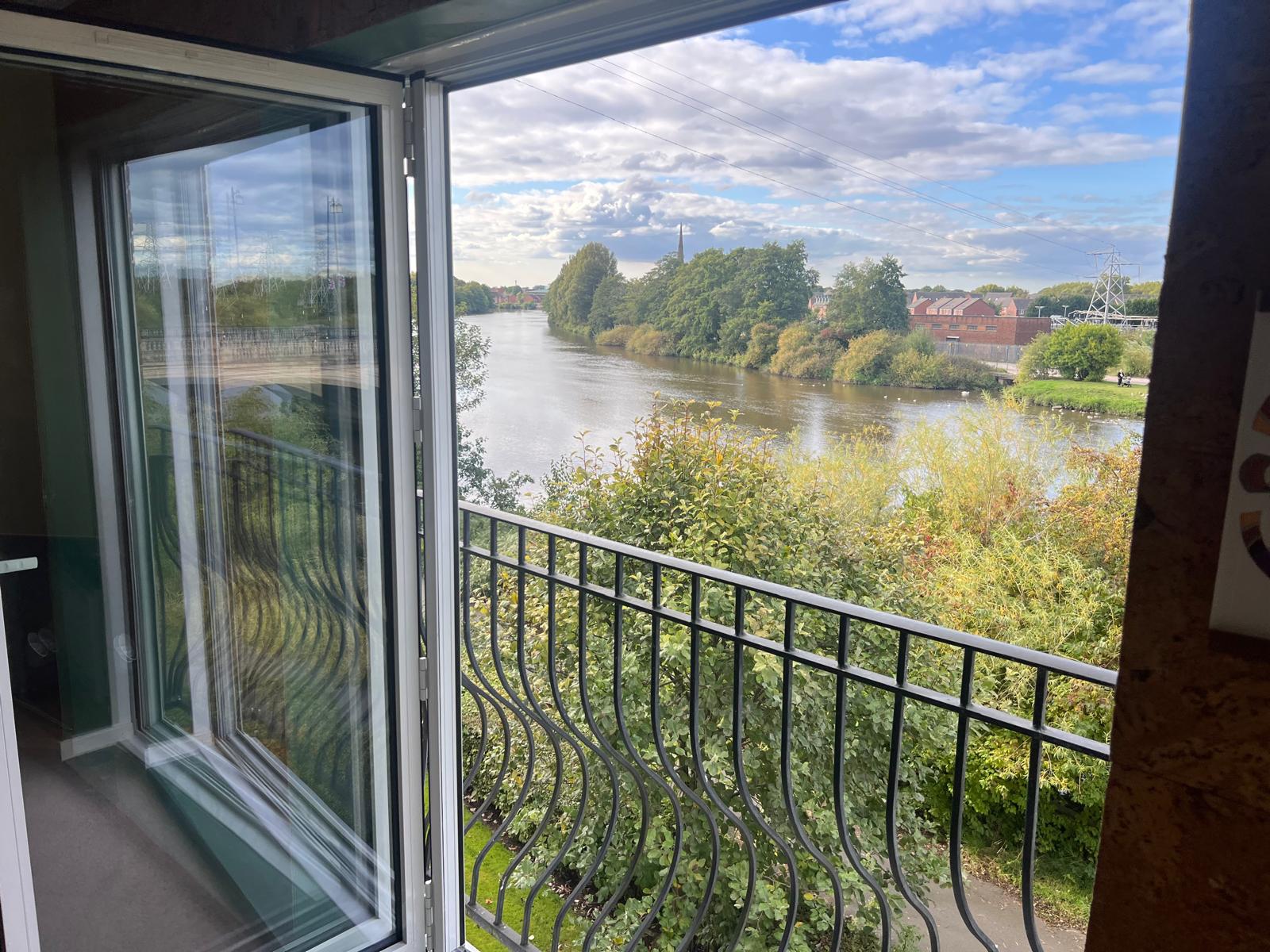
White framed sliding doors with a waterside viewWhite framed glazed doors fitted to a homeWhite framed doors opening from a living spaceWhite and grey framed windows on a brick rear elevationWindows and doors fitted to a red brick rear elevationLounge with white framed glazed doors onto a garden

Colours and finishes

White uPVC is still the most-specified and it’s the cheapest. Beyond that: anthracite grey foil, usually with a white internal face; golden oak and rosewood woodgrain foils; cream, chartwell green and agate grey for period elevations; and anthracite both sides where you want a consistent look.

A word of honesty about foils: they are a printed laminate bonded to a white substrate. They look good, they hold up well, and they are not the same as through-coloured aluminium. On a large or highly visible opening, or anywhere the reveals are deep, aluminium windows will look better in a dark colour and will keep looking better for longer.

Security

  • Multi-point locking on every opening light and every door
  • Mushroom cams engaging into steel keeps rather than plastic
  • Anti-snap, anti-bump, anti-drill cylinders on all doors — the anti-snap cylinder is the single most important security component on a uPVC door and it is the one most commonly value-engineered out by cheap quotes
  • Internally beaded glazing, so the beads can’t be removed from outside
  • Toughened glass where the Regulations require it
  • Hinge bolts on outward-opening doors

Fitted, certified, guaranteed

We survey the openings, have them made to size, and fit with our own installers. As a CERTASS-registered installer we self-certify against Building Regulations and register the installation for you — the Building Regulations Compliance Certificate arrives within about four weeks and is what your solicitor asks for when you sell the house.

Every installation carries a 10-year guarantee, and we’ll beat any genuine like-for-like quote dated within the last 14 days. A £100 deposit locks your price against sector price rises.

We fit uPVC windows and doors across Warrington, Cheshire and the surrounding areas — Widnes, Lymm, Culcheth, Leigh, Golborne, Chester, Northwich, Knutsford, Wilmslow, Altrincham, Sale and Hale.

Frequently asked questions

Twenty to twenty-five years for the frames. The sealed units usually go first — a blown unit can be replaced without changing the whole window, and if the frames and hinges are still sound that’s a much cheaper fix. We’ll tell you which you need rather than quoting a full replacement automatically.

A Window Energy Rating measures the whole window — glass, frame and spacer together — for heat lost, heat gained from sunlight and air leakage. A is the standard modern specification; A+ and A++ go further. It’s a more useful number than the U-value alone because it accounts for solar gain.

Yes, replacement windows are notifiable. We handle it as a CERTASS registered installer, so there’s no separate application and no Building Control fee — see our CERTASS and FENSA page for how the certification works.

Often, yes. If a unit has blown but the frame, hinges and locks are all fine, replacing the sealed unit is far cheaper than a new window. Send us a photo and the dimensions.

uPVC if the openings are conventional, you want white or a light colour, and cost matters most. Aluminium if the opening is large, you want a dark colour, or the windows sit alongside aluminium doors. Full comparison on the aluminium windows page.

A typical three-bed semi is one to two days for a full house of windows. We take out and replace one opening at a time, so the house is never left open.

Yes. Old frames and glass are taken away and recycled, and we leave the reveals made good.

Why buy from Exclusive Bifolds

  • 10-year guarantee on every installation
  • CERTASS registered — we self-certify and register your installation, so there’s no Building Control fee
  • We’ll beat any genuine like-for-like quote dated within the last 14 days
  • £100 locks your price against sector price rises
  • Our own installers — no subcontractors, no franchise
We Won’t Be Beaten On Price! Best Price Guarantee! Get Quote
+ +